


Rectangular pools have stuck around for a reason. They’re efficient, they suit almost any garden layout, and there’s something classic about the shape that never really goes out of fashion. But that simple geometry can trick people into thinking any rectangular pool cover will fit. It won’t, and this is why rectangular pools need custom-fit covers for maximum protection: even a cover that’s “close enough” leaves gaps, and gaps are where all the trouble starts.
Here’s what actually goes wrong with off-the-shelf covers, and what to look for instead.
Why “Close Enough” Doesn’t Cut It
Walk into most conversations about pool covers and you’ll hear the same assumption: find the closest standard size, order it, done. But pools don’t actually work that way. A coping stone here, a step cut into the shallow end, a ladder bolted to one side, a safety rail running along the deck, none of it shows up on a generic size chart, and no two pools end up with the same combination.
Get the size wrong on the small side and you’ll notice it fast. The fastenings take on stress they weren’t built for, the edges start pulling away, and within a few weeks there’s enough of a gap for leaves and rainwater to work their way in. Go too big instead, and the cover just hangs there loose, water collects in the low spots, wind gets underneath it, and the fabric starts breaking down from all that movement. Neither mistake is cheap to live with.
Popular Products
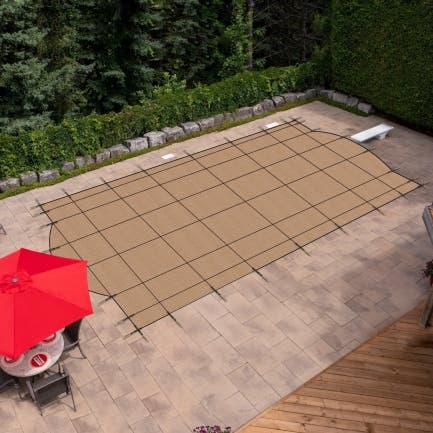
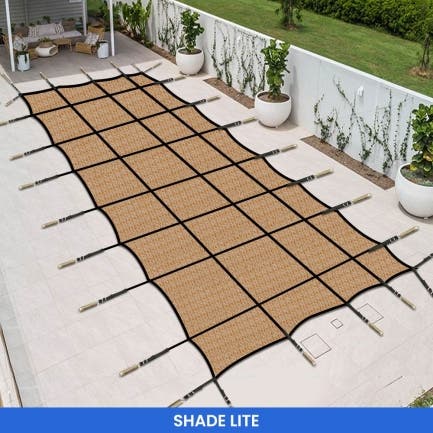
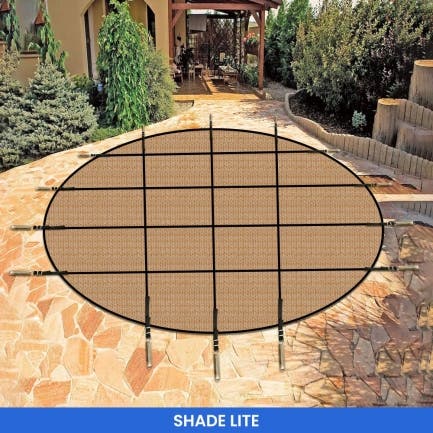
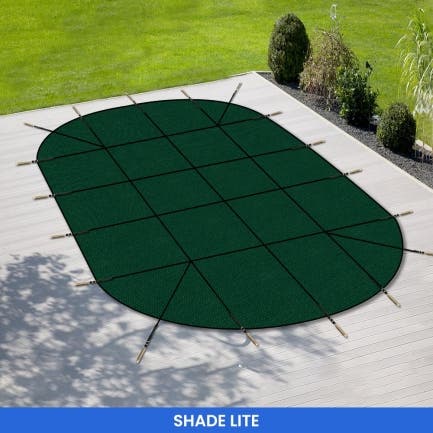
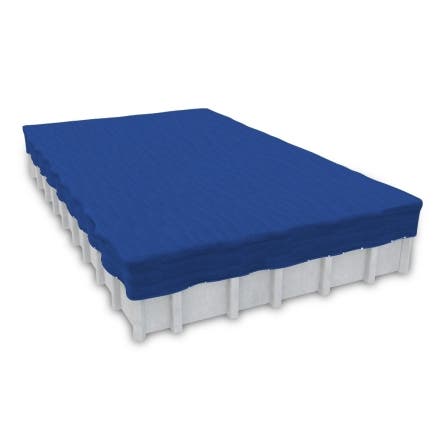
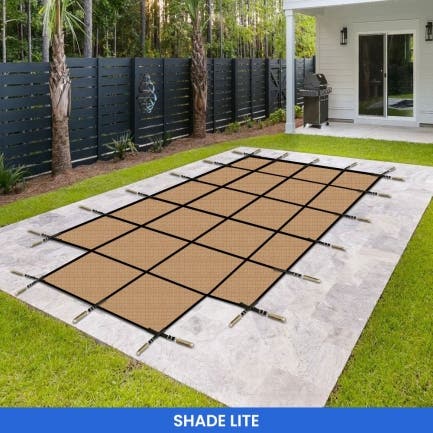
What You Actually Get with a Custom Fit
The benefits of Custom Pool Covers come down to one thing: precision. Once you have that, everything else follows.
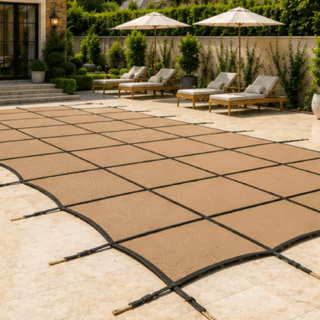
- It sits flush against the pool. No loose edges, no gaps around steps or rails.
- Debris and weather stay out. Leaves, pollen, and rain have nowhere to get in.
- Heat and water stick around. A tight seal cuts down on evaporation and heat loss, which shows up later as lower heating and refill costs.
- The fabric lasts longer. Without constant pulling or flapping, there’s simply less wear.
- It’s safer to walk on. A taut safety pool cover holds its position underfoot far better than one that shifts and sags.
What Makes a Rectangular Pool Cover Actually Protective
Not every cover that claims “maximum protection” delivers on it. A few things separate the ones that do:
Accurate measurements first. This means measuring the actual pool, length, width, and anything jutting into that space, rather than rounding to the nearest size chart.
Fabric that can take a beating. Look for waterproof covers for rectangular swimming pools built from UV-stable, heavy-duty material that won’t degrade after a summer of sun or a winter of rain.
Solid fastenings. Stitched hems, grommets, straps or tie-downs that actually hold in wind, not just sit loosely on top.
A bit of breathability. Covers that block everything but let zero air through tend to trap moisture underneath, which invites mould. Mesh pool covers strike a better balance, letting rainwater drain through while still keeping leaves and debris out.
Built for every season. Pool covers protect swimming pools year-round, but only if they’re rated for both summer heat and winter storms, not just fair weather.
Getting the Best Custom Pool Cover for a Rectangular Pool

The best custom pool covers for rectangular pools start with the tape measure, not the catalogue. That usually looks like:
- Measuring length and width at more than one point, since even a “rectangular” pool can be slightly uneven.
- Accounting for coping, decking, or anything else that extends past the waterline.
- Picking a fabric weight suited to your climate and how often the pool gets used.
- Choosing a fastening system, straps, clips, or a track, that fits how you’ll actually use the cover day to day.
A supplier that specialises in made-to-measure covers will handle most of this for you, but it’s worth knowing what they should be asking about before you order.
A Note on Outdoor Pools
Outdoor pools deal with more variable conditions than a pool that’s sheltered or indoors, so custom pool covers for outdoor pools have to work harder. Wind resistance and drainage matter more here. A cover that fits exactly reduces the surface area wind can catch, and lets rain run off instead of pooling on top, which means both the cover and the pool underneath last longer.
Quick Buying Checklist
A short pool cover buying guide for rectangular pools, if you’re about to buy:
- Measure carefully, including anything that overhangs the waterline
- Decide what matters most to you, debris protection, safety, heat retention, or all three (safety pool covers are worth a closer look if you have kids or pets around the pool)
- Check the fabric’s waterproofing and UV rating
- Match the fastening system to your pool surround
- Ask whether it’s made-to-measure or based on a standard template
- Think about how easy it’ll be to remove and store day to day
The Bottom Line
A cover is only as good as its fit. Standard sizing might look like the cheaper, easier option, but it tends to cost more in the long run, through gaps, sagging, extra cleaning, and higher energy bills. A custom-fit cover built to your rectangular pool’s actual dimensions is the more reliable route if you want it protected properly, whatever the season.
Covers and All makes pool covers to measure, built to fit rectangular pools precisely, so you’re not left guessing whether “close enough” will hold up.
Recent Comments